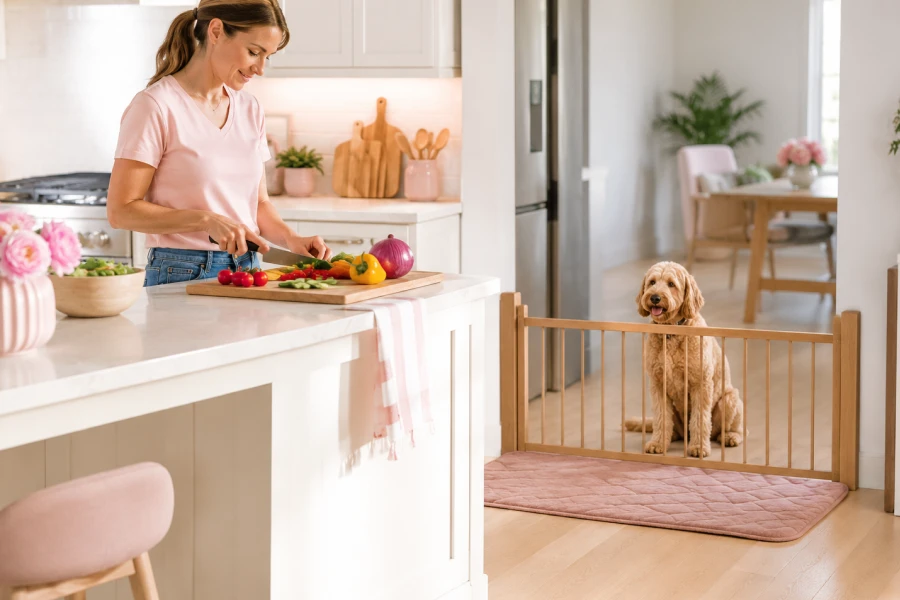
Kitchen safety for pets matters because the kitchen combines heat, food, movement, and distraction. A curious animal can step into danger within seconds. Hot pans, sharp tools, dropped food, cleaning products, and open cabinets all create risk. Busy evenings make those risks easier to miss. Your pet does not understand which smells are unsafe. It only knows the kitchen feels interesting and rewarding. A safer setup protects your animal without making cooking stressful. That is why pet-proof cooking spaces deserve real attention. Prevention works best when it becomes part of your normal kitchen rhythm.
Clear boundaries make kitchen routines safer and calmer. Pets need to know where they can rest during cooking. A mat outside the busiest zone can become a reliable place. Gates may help during high-risk moments. Training also supports better habits over time. You can reward calm distance instead of reacting after trouble starts. This approach lowers stress for everyone in the room. It also keeps your focus on cooking, not constant correction. Boundaries should feel consistent, not punitive. A pet that understands the routine becomes easier to protect.
Many kitchen dangers look harmless during daily life. A dropped onion, chocolate crumb, grape, bone, or fatty scrap can create serious concern. Trash cans attract pets because they hold strong smells. Open bags, counters, and plates also invite investigation. Even safe foods can cause problems when portions are too large. Guests may accidentally feed pets without asking. Children may share snacks without understanding risk. You need a household rule that stays simple. Food should be stored, cleared, and discarded quickly. That habit prevents emergencies before they begin.
Storage choices shape daily safety more than most people realize. Cleaning products should sit behind secured doors. Sharp tools should never rest near counter edges. Pantry items need sealed containers when pets can reach shelves. Trash cans should close firmly and resist tipping. Cords from appliances should stay tucked away. Bags with handles should not be left on the floor. Pets can become tangled or trapped in them. These changes take little time but offer strong protection. Using home pet safety tips helps turn storage into prevention.
Heat creates some of the fastest kitchen accidents. A pet can brush against an oven door or jump near a hot pan. Boiling water, steam, and grease splatter also create hazards. Slow cookers and air fryers may sit at reachable heights. Handles should face inward when pans are on the stove. Hot dishes need secure cooling spots away from edges. Never assume a pet will avoid heat naturally. Curiosity often overrides caution. Create a no-pet zone during active cooking. This simple habit can prevent painful injuries.
Safety improves when it becomes automatic. Before cooking, scan the floor for dropped items. Move bags, cords, and cleaning supplies out of reach. Close cabinet doors after every use. Put tempting food away immediately. Keep your pet occupied before the kitchen becomes busy. A puzzle toy or resting station can redirect attention. After cooking, clean spills and check trash access. These small actions build a dependable routine. The kitchen becomes less reactive and more controlled.
A safer kitchen changes how your home feels. You stop worrying about every sound behind you. Your pet learns calmer habits around food and movement. Family members understand the same expectations. Guests can follow simple rules without confusion. This protects your animal and reduces daily tension. Safety does not need to feel strict or complicated. It should feel like a smoother way to live. With pet accident prevention, ordinary cooking becomes more secure. Your kitchen can stay welcoming while still being well protected.


Leave a comment
You must be logged in to post a comment.