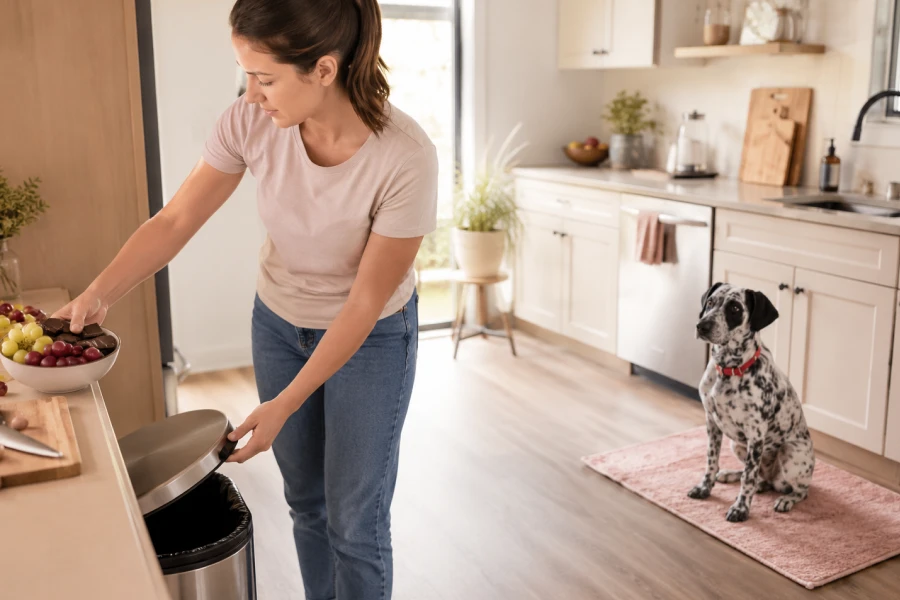
Kitchen pet hazards can appear in places owners stop noticing. A cabinet under the sink, a warm stovetop, or a dropped snack may seem ordinary. To a pet, each one can become an invitation. Kitchens combine smells, heat, textures, and human attention in one busy room. That makes prevention more important than reaction. You do not need fear to make better choices. You need awareness, organization, and consistent household habits. With pet safety at home, familiar spaces become easier to control. Small changes can prevent stressful emergencies.
Food dangers are easy to underestimate because they look normal to humans. Ingredients like chocolate, grapes, onions, garlic, and certain sweeteners can be risky. Bones can splinter or cause blockages. Rich leftovers may upset digestion. Dough, coffee, alcohol, and fatty scraps also deserve caution. Pets often move faster than owners expect. A single dropped piece can disappear quickly. Keep plates away from edges during meals. Clean floors after cooking. Clear food rules reduce confusion for everyone in the household.
Heat risks develop faster than most other kitchen problems. A curious pet can touch an oven door or move under a hot pan. Steam rises suddenly from pots, kettles, and dishwashers. Grease can splatter beyond the stove area. Warm appliances may remain dangerous after cooking ends. Owners should assume pets do not understand residual heat. Use back burners when possible. Turn pot handles inward. Create distance during active cooking. These practical habits reduce the chance of painful contact.
Cabinets and trash bins attract determined animals. Food smells linger even after packaging is empty. Cleaning products may sit low enough for pets to reach. Plastic bags can trap heads or paws. Foil, wrappers, and skewers may carry tempting residues. A clever pet may learn to open doors or lids. This is why secure storage matters. Latches, covered bins, and sealed containers can prevent exploration. For everyday routines, pet-proofing your home starts with the spaces pets revisit most.
Guests can unintentionally make kitchens less safe. They may leave plates low, drop food, or feed pets without asking. Children may share treats because it feels kind. Doors may stay open while people carry dishes. Trash may overflow during parties. Pets can also become overstimulated by noise and movement. Hosting requires a stronger safety plan than normal days. Set rules before guests arrive. Move pets to a quiet room if needed. A calm environment prevents mistakes when attention is divided.
Knives, skewers, graters, and broken glass can injure pets quickly. These items should never rest near counter edges. Dishwashers should be closed when sharp utensils face upward. Broken glass needs immediate cleanup, including careful floor checks. Pets may step into tiny fragments before you notice them. Trash bags with sharp packaging also need secure handling. Even curious sniffing can cause injury. Keep tools contained during meal prep. Clean as you go whenever possible. A tidy kitchen reduces risks without slowing your routine.
Prevention becomes easier when safety actions repeat every day. Scan the floor before and after cooking. Close cabinets fully. Store food immediately. Keep trash contained. Move cleaning products after use. Watch heat zones until appliances cool. Give pets a safe place outside the busiest path. Teach family members the same rules. This shared system prevents small oversights from becoming emergencies. With kitchen accident prevention, a familiar room becomes safer, calmer, and easier to enjoy.


Leave a comment
You must be logged in to post a comment.