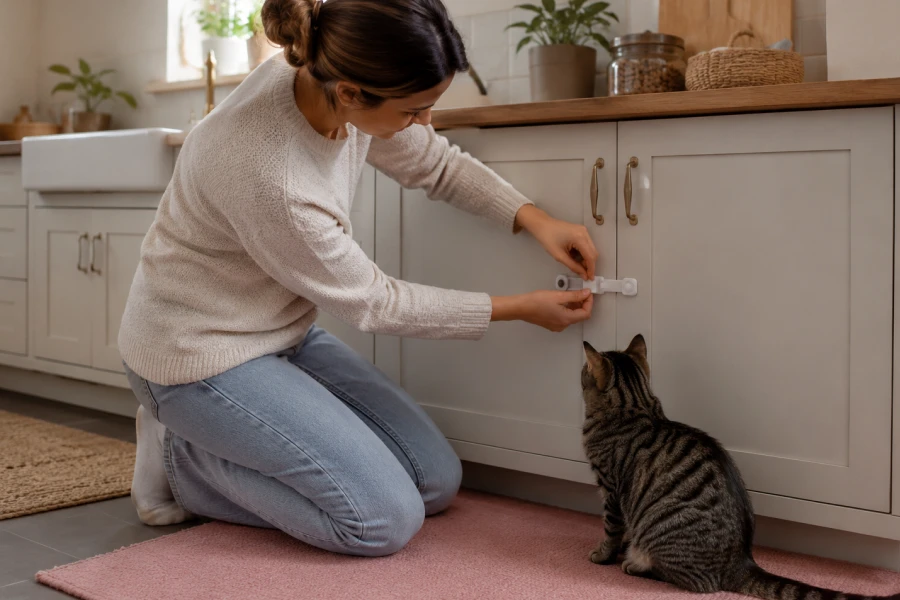
A pet-proof kitchen gives your animal less access to everyday hazards. It also gives you more peace during busy meals. Pets explore through smell, movement, and habit. That curiosity can lead them toward hot surfaces, unsafe foods, and sharp objects. The kitchen rewards investigation with crumbs and attention, so boundaries matter. A safer kitchen does not need to look clinical. It can stay warm, functional, and easy to use. The goal is smart prevention. With safe kitchen setup, your daily routine becomes easier to manage.
Zones help pets understand the kitchen without constant correction. You can create a calm waiting area away from the stove. A bed, mat, or gate can define that space. Rewarding quiet behavior makes the boundary more appealing. This works better than shouting after the pet enters danger. Zones also help family members stay consistent. Everyone knows where the pet belongs during cooking. The layout should match your kitchen shape. Small kitchens may need stricter boundaries than open layouts. Clear zones turn safety into a visible system.
Counters attract pets because they hold smells, movement, and attention. Cats may jump up when food appears. Dogs may reach with paws or noses. A knife near an edge can fall quickly. Hot pans and glass dishes create injury risk. Food scraps may include ingredients pets should not eat. Cleaning sprays can also remain on surfaces after use. You should clear counters before they become tempting. Keep risky items toward the back when actively cooking. A cleaner counter reduces both noise and danger.
Containers make food and trash less tempting. Choose sealed storage for pantry items. Use locking bins when pets can open cabinets. Keep trash covered and heavy enough to resist tipping. Store pet treats away from human cooking areas. That prevents begging and counter curiosity. Move compost scraps outside quickly when possible. Even safe leftovers can cause stomach upset. Strong storage choices reduce daily negotiations with your pet. For practical planning, pet-safe home habits make prevention easier.
Movement causes many kitchen accidents. People turn quickly with hot pans. Pets walk underfoot at the worst moments. Children may move unpredictably during meals. A pet near the floor can trip someone carrying sharp or hot items. Control does not require harsh rules. It requires timing, barriers, and calm reinforcement. Use gates when cooking becomes intense. Teach pets to wait outside the busiest path. A controlled traffic pattern protects both humans and animals.
Cleaning supplies often stay close to sinks and floors. That placement can put them within pet reach. Bottles may leak, tip, or attract chewing. Sponges and towels can carry food smells. Mop buckets may contain residues pets should never drink. Secure these items after every cleaning session. Use cabinet locks when needed. Avoid leaving wet floors unattended if pets walk through the kitchen. Read labels and store products responsibly. Safe cleaning habits support the entire prevention plan.
The best safety systems blend into ordinary life. You should not need to remember dozens of rules. Instead, your kitchen should make the safe choice obvious. Food has a place. Trash closes securely. Heat stays out of reach. Your pet has a calm station nearby. Family members follow the same routine. Guests receive simple instructions when they visit. Over time, the system feels effortless. With animal-safe kitchen planning, prevention becomes part of how your home works.



Leave a comment
You must be logged in to post a comment.