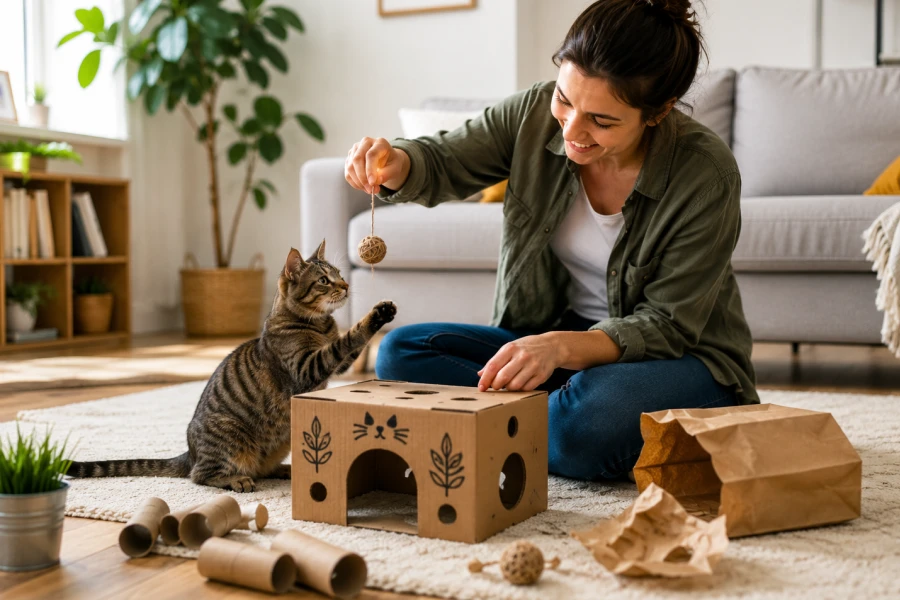
DIY cat toys can make feline enrichment feel creative, affordable, and personal. Cats do not judge toys by price or packaging. They respond to movement, texture, sound, hiding spots, and surprise. A simple object can become exciting when it triggers natural instincts. Homemade toys also let you adjust play to your cat’s personality. Some cats love chasing. Others prefer batting, sniffing, hiding, or solving small puzzles. The key is safety and supervision. With feline play inspiration, ordinary materials can become useful enrichment tools.
Safety matters more than clever design. Cats may chew, claw, lick, or swallow parts you did not expect. Avoid tiny decorations, loose threads, sharp edges, staples, and fragile plastics. Remove handles from paper bags. Supervise string, ribbon, and yarn every time. Store these items away after play. Check cardboard for tape or residue before offering it. Replace toys once they tear or fray. A homemade toy should invite curiosity without creating risk. Safe simplicity usually beats complicated construction.
Cats notice textures with their paws, teeth, whiskers, and noses. Crinkly paper, soft fabric, smooth cardboard, and corrugated surfaces all create different reactions. A toy that feels strange may attract attention before it even moves. You can wrap a safe object in fabric for batting. You can place a toy under a towel for stalking. Cardboard strips can become puzzle fillers. Texture keeps play from feeling repetitive. Watch what your cat chooses. Preferences reveal the best next idea.
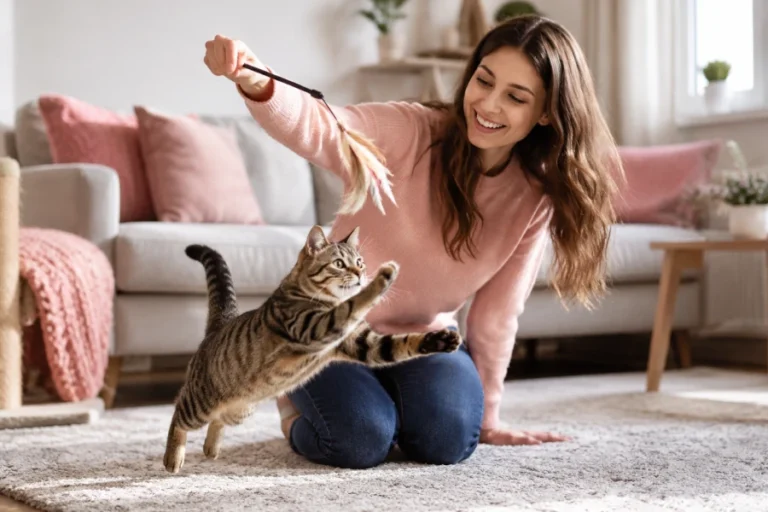
Good homemade toys help cats stalk, chase, pounce, and catch. A wand-style toy can use fabric tied securely to a safe stick. A cardboard box can become a hidden ambush spot. A paper ball can roll unpredictably across the floor. Treat tubes can encourage problem solving. Rotate these options rather than leaving everything out. Scarcity makes toys feel new again. Let your cat win during play. That final catch matters emotionally. For better variety, interactive cat play can shape each session.
Boredom often hides behind ordinary behavior changes. A cat may sleep excessively, scratch furniture, beg for food, or run wildly at night. Homemade toys offer fresh stimulation without constant shopping. They also give you a reason to observe your cat more closely. You notice which motions attract attention. You learn which sounds create hesitation. You discover whether your cat prefers solo puzzles or shared games. These details improve daily care. Play becomes more thoughtful. A bored cat can become more relaxed when life feels engaging.
Leaving every toy available can make them less exciting. Cats often respond better when toys disappear and return later. Store several homemade pieces in a small bin. Bring out only a few each day. Change textures, speeds, and locations. Move boxes between rooms. Hide a toy behind furniture. Use puzzle pieces during calmer hours. This system keeps enrichment easy and affordable. It also prevents clutter from taking over your space. A rotating collection can feel new without requiring constant purchases.
The best homemade toys reflect your cat’s individual style. A cautious cat may enjoy slow movement under fabric. A confident cat may love quick chases through tunnels. A food-motivated cat may prefer treat puzzles. A senior cat may need softer, lower-effort games. Custom play respects those differences. It also strengthens your connection because you are designing around real behavior. Small experiments become part of the relationship. With DIY pet enrichment, your home becomes a more responsive place for your cat.


Leave a comment
You must be logged in to post a comment.