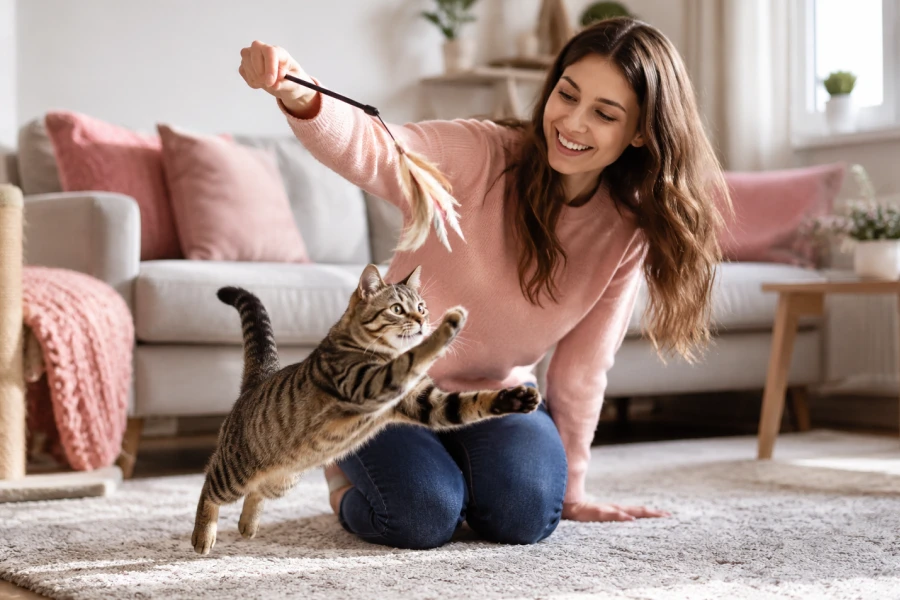
Interactive play ideas for cats help indoor pets stay curious, active, and emotionally balanced. A cat may seem independent, but it still needs purposeful stimulation. Without it, boredom can appear as scratching, overgrooming, overeating, or restless nighttime behavior. Play gives your cat a healthier outlet for natural instincts. It also builds trust between you and your pet. The best games do not need to feel complicated. They need timing, variety, and respect for feline hunting patterns. With cat enrichment activities, ordinary rooms can become more engaging. Your cat gets movement, challenge, and connection.
Cats enjoy play because it mirrors hunting behavior. They watch, stalk, chase, pounce, catch, and rest. A good session respects that sequence. Waving a toy randomly may excite your cat briefly, but it often misses the deeper pattern. Move toys like prey, not decorations. Let the cat pause and plan. Allow successful catches during the game. End with a small reward or meal when possible. This creates satisfaction instead of frustration. Play feels more meaningful when it matches how cats naturally think.
Many cats prefer brief play over long sessions. Ten focused minutes can feel more effective than half an hour of scattered effort. Energy rises quickly, then fades. Watch your cat’s body language for signs of fatigue. Heavy breathing, turning away, or flattened interest means the session should stop. Younger cats may need more frequent play. Older cats may enjoy slower, softer movement. The goal is engagement, not exhaustion. Consistency matters more than intensity. A daily rhythm helps your cat anticipate fun.
Variety keeps familiar toys from becoming invisible. Rotate wand toys, tunnels, crinkle materials, puzzle feeders, and hidden treats. Change the room layout occasionally. Move a box near a chair to create a new stalking route. Hide toys under fabric so movement feels mysterious. Use vertical space if your cat likes climbing. Quiet cats may prefer slower games. Bold cats may enjoy faster chases. With creative cat games, small adjustments can make home feel fresh again. The best ideas stay flexible.
Play creates a shared language between you and your cat. You learn when your cat feels confident, cautious, excited, or tired. Your cat learns that you provide safe fun. This trust can improve handling, grooming, and daily cooperation. Shy cats may become more comfortable through gentle play. Active cats may settle better after structured movement. Bonding does not always look dramatic. Sometimes it appears as relaxed eye contact or quiet closeness after a session. These moments matter. They turn care into relationship.
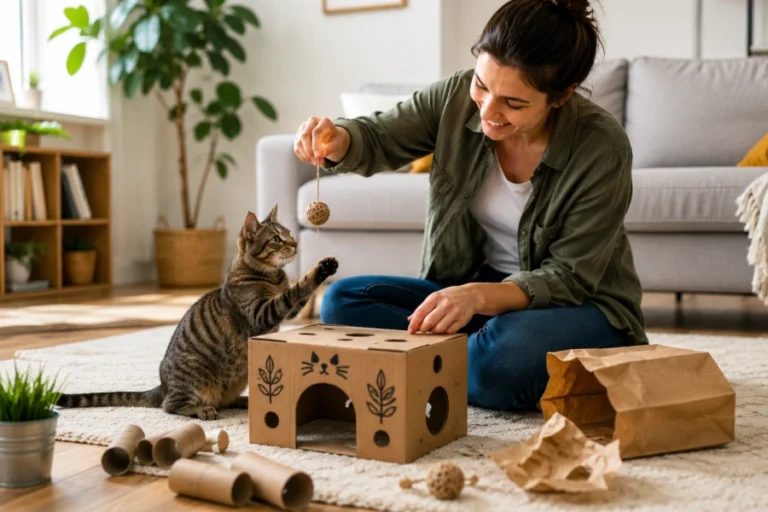
You do not need expensive toys to create engaging play. A cardboard box can become a hiding station. A paper bag without handles can become a crinkle tunnel. A towel can hide a moving toy. Toilet paper rolls can become treat puzzles. Safe household materials often work beautifully when supervised. Always remove small pieces that could be swallowed. Avoid strings when you cannot watch closely. Check toys for damage after use. Simple games feel richer when they change regularly and stay safe.
Indoor life can be safe, but it should not be dull. Cats need chances to think, move, choose, and succeed. Play supports physical condition and emotional comfort. It can reduce stress behaviors by giving energy somewhere useful to go. Your home becomes more than a feeding and sleeping place. It becomes a landscape of small adventures. Start with your cat’s current preferences. Build from what already sparks interest. With smart play routines, indoor days feel more alive for both of you.



Leave a comment
You must be logged in to post a comment.